
The Railway Through Oxenhall
1885-1964
With the canals in decline and railways coming to prominence, plans to use the bed of the Oxenhall Canal as the route of the Newent to Ledbury line were formed.
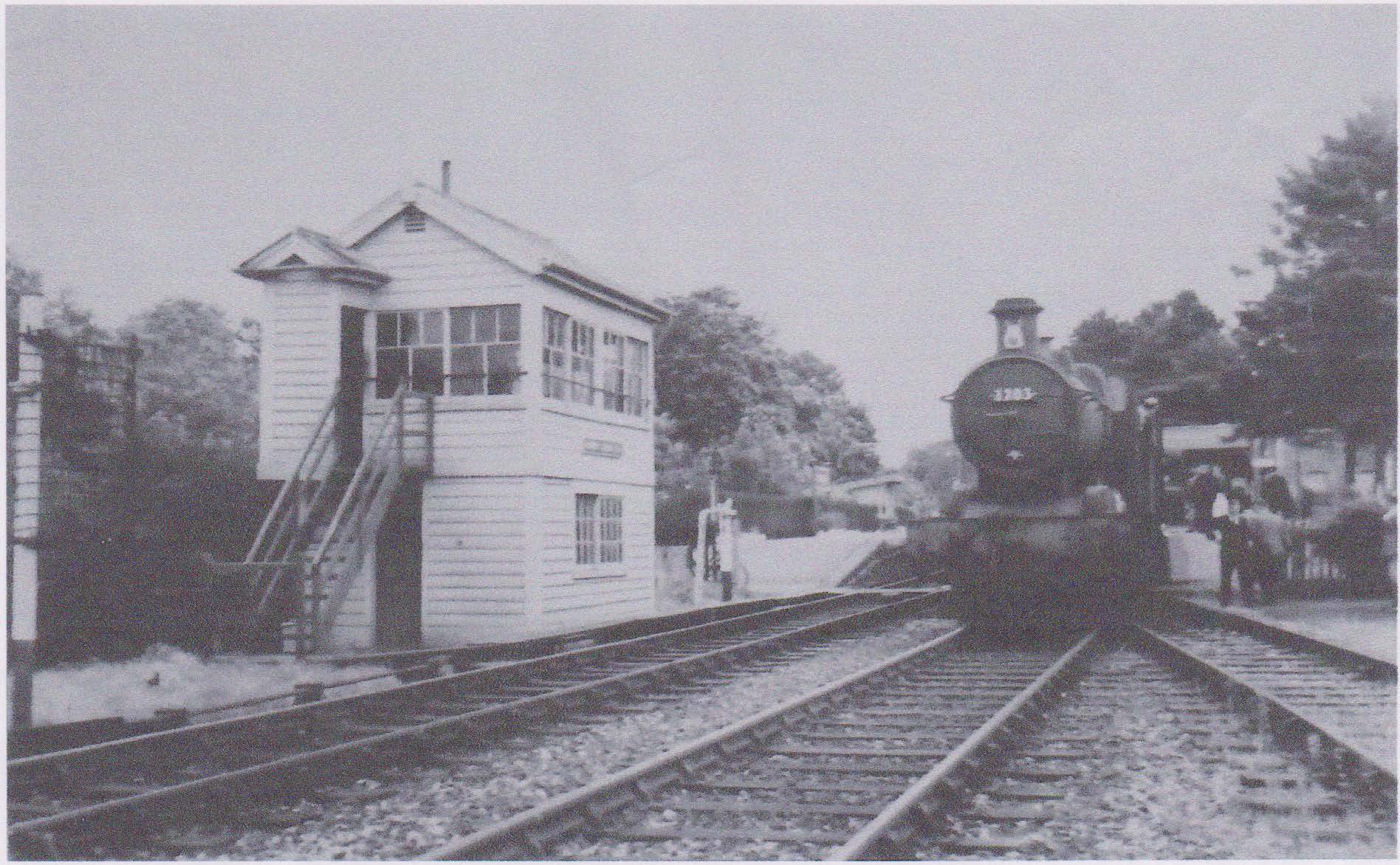
Newent Station from the tracks, 1959
Initially, on weekdays, there were five passenger trains and one local goods train running each way between Gloucester and Ledbury, with a signal box at Newent continually manned on those days.
The passengers at Newent station were provided with facilities that commuters today can only dream of…
Your luggage could be collected in advance, or delivered to any address in town; and the firm R.T. Smith and Co. operated a railway parcels receiving office, in addition to that at the station. No need to wait in. There were also Excursion trains that ran from the Midlands to South Wales calling at all stations along the way.
The railway served the agricultural community too - with cattle trains to and from Gloucester Market, and the transport of seasonal fruit to markets in the North and the Midlands, and many other useful services were provided - with GWR freight services between the wars.
However the heyday of the country railways would eventually come to a close - but so lovely while it lasted. Please find below a timeline of this wonderful chapter in Oxenhall’s history - and at the bottom of the page a link to a PDF with more history and detail.
A Time Line of The Daffodil Line - Gloucester to Ledbury
Plans published. Newent Railway to join the GWR at Over
1872
1873
Newent Railway incorporated
Plans to use as much of the canal bed but to build a new section avoiding the tunnel
1874
1881
Construction work began southwards from Ledbury using canal to transport materials from the River Severn
Work started on the Dymock/Newent section. Stations built at Dymock, Newent, and Barbers Bridge. The line was single track to Dymock then double track to Ledbury
1883
On the 27th of July the first service begins, coinciding with the Gloucestershire Agricultural Society Show. The line became known locally as The Daffodil Line
1885
Use of the railways have been in decline, and railways are turning to diesel. Other means of transport are taking over - such as buses, cars and lorries - and electricity is superseding coal.
1950’s
On 11th July the last passenger train leaves from Gloucester to Ledbury - see photograph below
1959
Last commercial freight train runs the tracks
1964
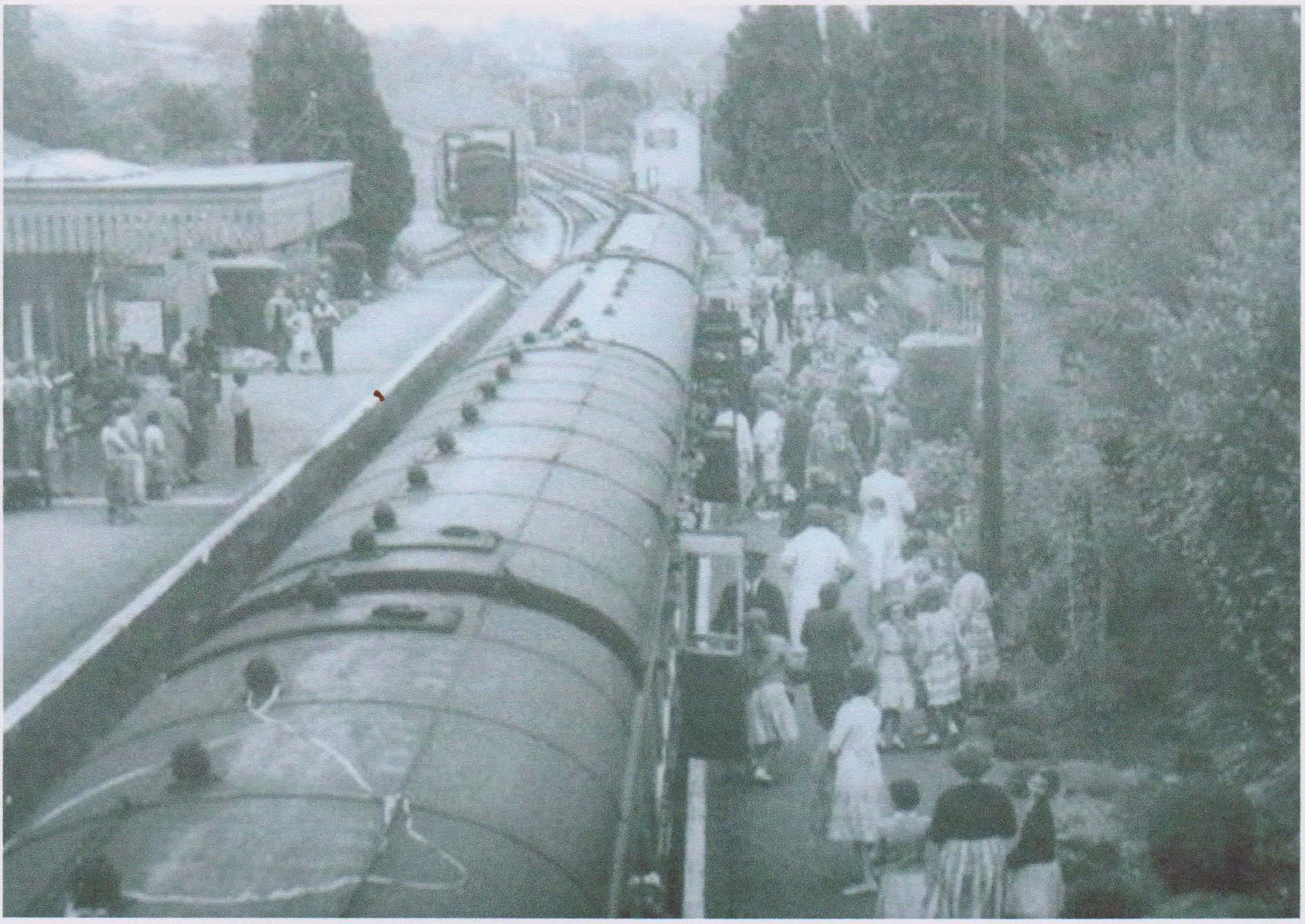
The Last Passenger Up Train - 8:20pm, from Gloucester to Ledbury, 11 July 1959. Photo taken from the bridge at Dymock by P.G. Moore